The Practical Beauty of Vintage Pastel Rose Journal Pages
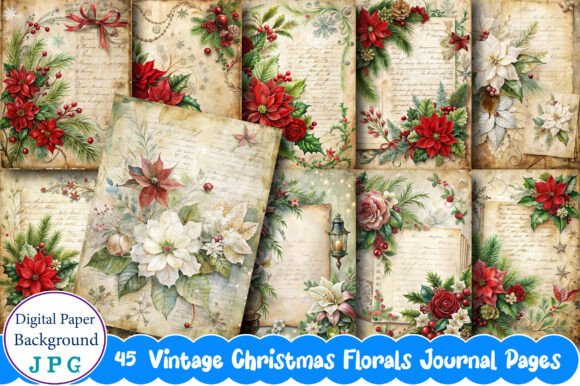
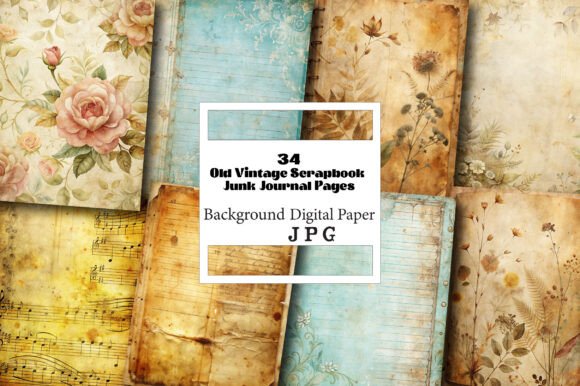
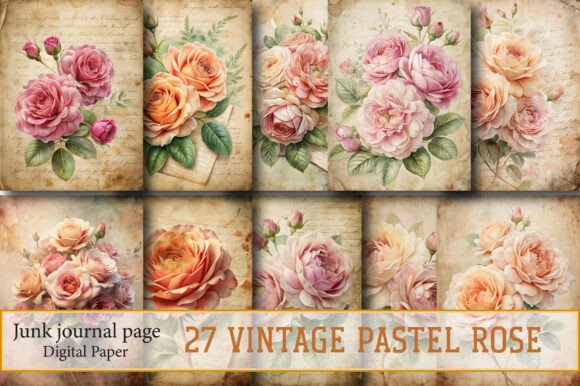
At its core, the phrase Vintage Pastel Rose Journal Pages refers to a versatile digital asset: a collection of high-resolution, 300 DPI JPG images featuring a specific aesthetic blend of nostalgic charm and soft, romantic color palettes. These are not merely pretty pictures; they are a functional, process-oriented toolkit for a wide spectrum of creative and professional workflows. Understanding where these assets fit within a broader process is key to unlocking their full potential, whether you are a hobbyist crafting a personal junk journal or a small business owner developing cohesive branding for a client.
Integration into the Creative and Professional Workflow
The true value of Vintage Pastel Rose Journal Pages emerges when viewed as a foundational component, not an end product. Their integration happens primarily at the preparation and asset creation stage of a project. Before a single physical item is crafted or a digital graphic is finalized, these pages serve as the raw visual material. A graphic designer, for instance, might acquire such a digital paper pack set at the outset of designing a wedding invitation suite. The pages become the background textures, the floral motifs for decoration, and the cohesive color base that ensures every element—from the main invitation to the matching thank-you cards and party napkins—feels harmoniously connected.
This seamless integration relies heavily on their technical specifications. The high-resolution 300 DPI format is a deliberate choice for quality control and compatibility. It means the assets are prepared to interact smoothly with professional printing processes for items like posters, book covers, and product labels, as well as with digital fabrication methods like sublimation for tumbler wraps and t-shirts. The fact that dimensions can be resized without loss of quality is a critical feature for efficiency; it allows a single asset to be adapted from a large wall art print down to a tiny gift tag, saving time in asset sourcing and maintaining visual consistency across an entire project.
A Multidisciplinary Tool for Diverse Outcomes
The application list—from junk journals to website graphics—is not a random assortment but a map of interconnected use cases. Consider the workflow of a blogger or content creator. They might use these Vintage Pastel Rose Journal Pages first as backgrounds for a series of social media posts promoting a bridal event, ensuring a trendy and uniform look across platforms. Later, the same asset pack can be repurposed within the actual event materials: the digital planner covers for guests, the printable illustrations for party decorations, and the graphics for the event website. This repurposing across stages (promotion, execution, and follow-up) maximizes the initial investment and streamlines the creative process.
For the entrepreneur or marketer, these digital papers function as a cost-effective brand asset library. Instead of commissioning custom illustrations for every new product line—such as candle soap product labels and packaging—a curated set like this provides a ready-made, stylistically consistent visual library. The practical implementation involves importing the JPGs into design software, extracting elements, and combining them with logos and text. The vintage pastel rose aesthetic itself can become a temporary or permanent brand theme, communicating qualities like elegance, warmth, and handmade care.
Practical Implementation Across Common Projects
Let’s examine a more granular workflow example: creating a handmade junk journal. The process begins with preparation—selecting and printing the specific journal pages from the digital download. Their high resolution ensures that even when printed, the delicate pastel rose details remain sharp and clear. During the assembly phase, these pages interact directly with other tools and materials: they are cut, layered, and combined with physical elements like ribbons and stamps. The pages might serve as the base for written entries, as decorative inserts, or as covers for the journal itself. Their design influences the entire journal’s theme, guiding the selection of complementary ephemera and color choices for subsequent steps like collage crafting and decoupage art.
In a digital context, an educator or freelancer preparing a digital presentation can integrate these assets to elevate visual communication. Here, the workflow involves importing the pages into presentation software or graphic design tools to create custom slide backgrounds, section dividers, or illustrative elements. This use moves beyond mere decoration; it aids in organization and audience engagement by providing a soft, professional, and non-distracting visual framework that supports the content. The same assets, saved for long-term use, can be reused across multiple presentations or training materials, building a recognizable visual identity for the creator’s work.
Factors for Smooth Integration into Your Routine
To integrate Vintage Pastel Rose Journal Pages smoothly into your own work, consider these practical observations. First, assess the scope of your project. A large undertaking like a full wedding suite will benefit from downloading the entire pack to have maximum variety at your disposal. A smaller project, like making a set of greeting cards, might only require a few selected sheets. Second, organize your digital assets immediately after download. Create a dedicated folder with clear subcategories (e.g., full backgrounds, floral patterns, textural elements) to enhance usability and speed up future retrieval when you need a component for a new idea like coaster designs or playing cards.
Compatibility with your existing tools is usually straightforward due to the universal JPG format, but always verify the required dimensions and DPI for your specific output method. For instance, sublimation for mugs requires a precise wrap template; you would resize the vintage rose page to fit that template before proceeding. For KDP (Kindle Direct Publishing) book covers, you must adhere to Amazon’s specific dimension and resolution guidelines, which these resizable, high-DPI files are prepared to meet. This pre-check avoids quality issues later in the process.
From Asset to Finished Product: A Process-Oriented View
The journey from a digital download to a physical or digital finished product is a linear yet flexible process. The Vintage Pastel Rose Journal Pages sit at the very beginning, as the raw ingredient. Their role is to provide consistency. When you use the same set of pages for a baby shower’s invitations, its party decorations, and its thank-you tags, you create a visually unified event experience. This consistency is not just aesthetic; it’s practical. It reduces the cognitive load of searching for disparate matching assets and accelerates the production timeline.
Furthermore, these assets encourage iterative creativity. A crafter might start by using a page for a simple gift tag. Seeing the result, they might then scale the idea, using the same or similar pages for wrapping paper, and then further for coordinating party napkins. The asset pack supports this scaling naturally. For digital planners, the pages offer a quick way to customize planner covers without needing advanced design skills, making the personalization process efficient and accessible. This adaptability makes them a sustainable resource, relevant for the initial project and ready for inspiration in future DIY projects, 3D paper crafts, or even as watercolor-inspired wallpapers for your digital devices.
Ultimately, the utility of Vintage Pastel Rose Journal Pages is defined by their placement within a purposeful workflow. They are the bridge between a creative vision and its tangible execution. By providing high-quality, versatile, and thematically coherent visual foundations, they remove a significant barrier in the preparation phase for countless applications. Their value is realized not when downloaded, but when actively integrated into your process—sized, layered, printed, or digitally placed—to become part of something larger: a cherished handmade notebook, a compelling website background, a branded product label, or a beautifully documented memory in a journal. Their process-oriented design ensures that from the first step of selecting an image to the final step of presenting a completed work, the path is both clear and creatively open.